Materials used in our School

Download a PDF copy of this list. Click here -> Materials, Supplies 2026.pdf

I encourage you to use what you have on hand and what works best for you. It's ok if you don't have the same supplies as what you see here. 

Every artist has their favorite brushes, paper, and paints. Over time, I have developed a list of preferred materials, and hope this will serve as a helpful guide.

I am an affiliate of both Blick art Materials and Rosemary & Co. and receive a small commission when you click any of these links. Thank you!


Scroll lower to learn about:

  • Paints
  • Brushes
  • Paper
  • Additional materials
  • Recommended links to purchase materials


Prints

Would you like to make prints of your paintings? I use iPrintfromhome to create high-quality giclee prints from your own digital files. My favorite paper is Somerset Velvet. When you create an account at iPrintfromHome.com, I'd love it if you would enter my name, Rebecca Rhodes, in the "Referred by" entry box. Thank you!

Are you New to Watercolor?

This link will take you to a free lesson listing simple materials you can use to get started. Click here to download a list for beginners: Materials, Supplies 2026-beginners-rhodes.pdf


Materials Used in our Tutorials

Feel free to use your favorite brushes, paper, colors. 

Paints

If you don't have these colors, it's ok. Feel free to use your favorite colors! 

In these tutorials, we use Winsor & Newton Professional Watercolor Paints. The small, 5 ml tubes, last a long time. Feel free to use tubes, pans, or anything that you prefer.

Colors used Most Often in our Tutorials (click the links below to learn more)


It's amazing what you can create with five colors!

  • French Ultramarine Blue with Burnt Umber or Burnt Sienna creates all kinds of grays, blacks, and browns.
  • Permanent Rose with a Yellow Ochre or Winsor Lemon creates pinks, reds, oranges
  • Yellows layered with browns opens up a whole new library of golds, browns, tans


To create white whiskers and white fur, I prefer either of these products:

Brushes

If you don't have these brushes, it's ok. Feel free to use your favorite brushes! I use a small brush for creating fur and details and a medium-to large brush for covering larger areas.

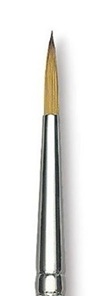
SMALL BRUSH: Pointed Round Brush 

A pointed round brush has a narrow, pointed tip for creating details and thin, fine hairs. 

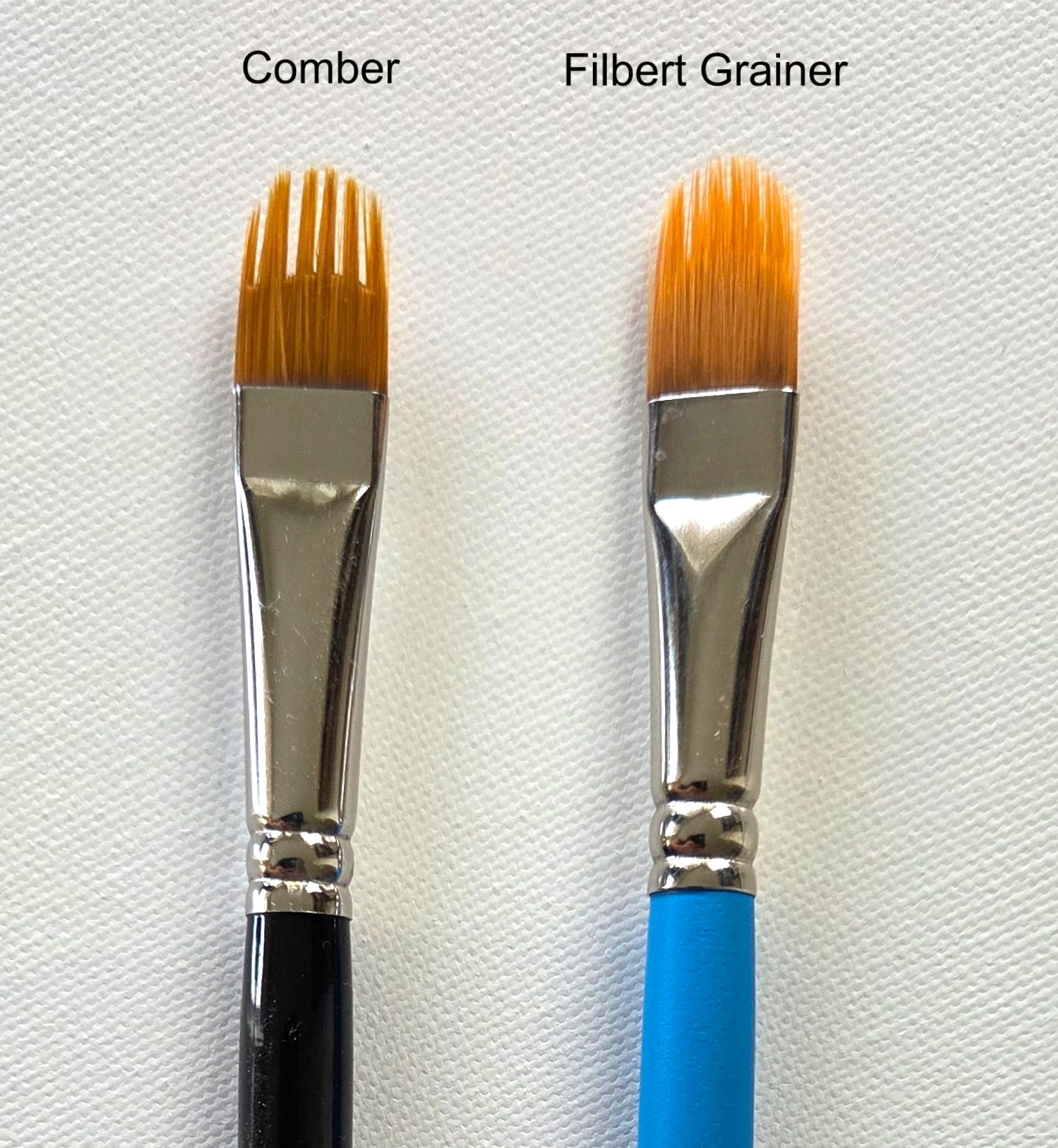
These two brushes are used in our school. Either brush will work well for creating fur and details. They are both sturdy enough to create fur and retain a nice, fine point. 


MEDIUM TO LARGE BRUSH 

Used to cover larger areas; Any round watercolor brush will be fine. You will see these brushes in our recent tutorials:


CREATING FUR QUICKLY

You might see these brushes in recent tutorials - not required, but used to create fur quickly. 


Brushes Used by Members

Many members use the brushes listed above but others have their favorites, listed below. I've used all of these, and some are seen in older tutorials. I encourage you to experiment until you find a brush that best fits your needs:


Paper

We use Arches Natural White 140 lb. watercolor paper for our tutorials, mostly Cold Press. You can purchase the paper in blocks, single large sheets that you can cut to size, and sometimes in packs of sheets.

Preparing the Paper for Painting

This step is optional, and helps to keep the watercolor paper from wrinkling, buckling. 

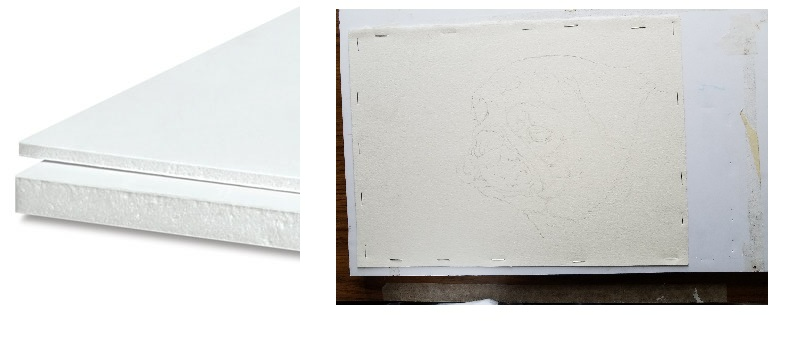
Before transferring the drawing to the watercolor paper, I soak the watercolor paper for 3 to 6 minutes in water, staple the edges of the paper to Gatorfoam Board, and allow to dry completely, usually overnight.

Gatorfoam is a lightweight, rigid display board that has a dense, firm core and a water resistant surface. I use the 1/2 inch thickness. The board comes in different sizes. I have the 16" x 23" - my paintings are usually no larger than this.


Additional Materials

Tracing Paper: I use Canson Artist Series Tracing Paper Pads to create my initial drawing.

Transfer Paper: To transfer the drawing to the watercolor paper, I use graphite paper or Saral Wax Free Transfer Paper.

Sturdy Container for Water: I use a large plastic container so the water does not have to be changed often.

Paper Towels, cloth Towels: For cleaning brushes, blotting, and cleaning up

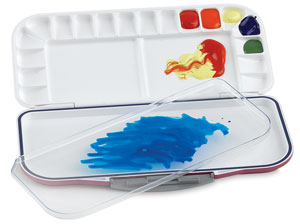
Palette: This hinged plastic palette contains 18 wells. Brand: Mijello Fusion Airtight Watercolor Palette. Any hard surface that repels water, such as a plate, will work just as well.


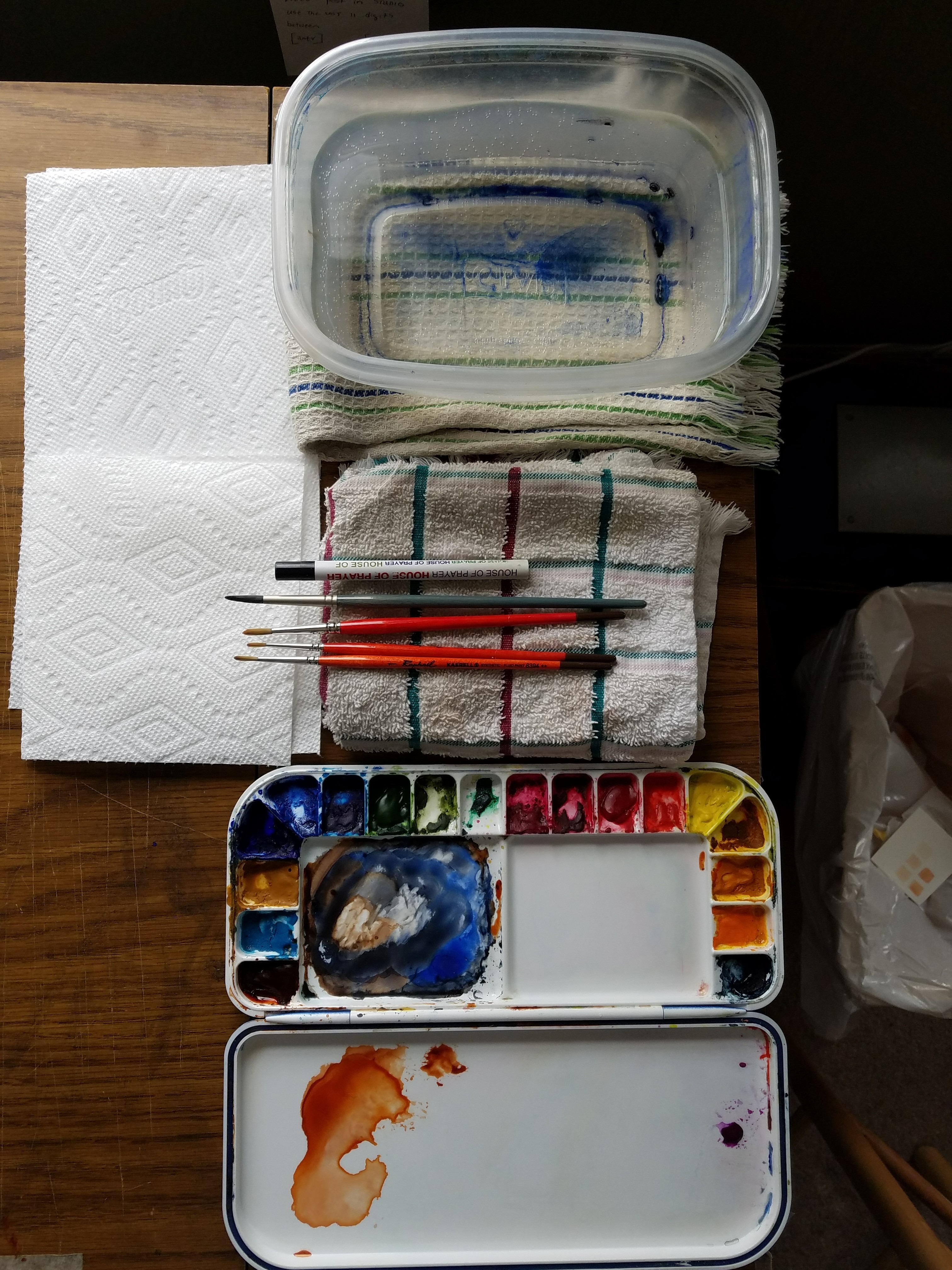
My set up looks like this.

Plastic container for water, brushes on the folded hand towel, paper towels nearby for blotting and cleaning up. I’m right handed, so these items are on the right, and my computer screen to view the reference photo is on the left.

I hope this information is helpful to you as you choose materials that work best for your needs.


Where to Purchase Supplies

Not sure where to purchase painting supplies? Here is a list of resources, thanks to the members of our School! Email Rebecca Rhodes at [email protected] with your additional suggestions, and thank you!

Where to Purchase Supplies

United States


United Kingdom


Australia


Canada


Additional….


This page was updated in 2026.

If you have any questions or suggestions, contact me, Rebecca Rhodes at [email protected]. Thank you!